Product
For lighting designers, console engineers, video teams and production companies. Review lighting, screens, scenery and effects in one Unreal Engine scene, check the patch, bring the systems together, replay dynamic content, then hand the patch sheet, MVR, fixture library and grandMA preparation data to the next stage.
Positioning
It works before load-in and between handoffs.
Look at the scene, line the systems up, then hand the organised data on. It runs inside Unreal: not a web visualizer, and not a replacement for show control.
Where it sits
Scene, fixtures, patch, handoff, all inside the same Unreal Engine project.
The venue comes into UE as-is through Datasmith / USD. Trusses, roofs, grandstands and curtains are procedural: change a parameter and they rebuild.

A manufacturer's GDTF package becomes a working fixture: channels, mechanical axes, model, gobo and colour wheels all read from the package. The shipped library is ready to place.

Patch Tool auto-increments from the scene. Drag fixtures around a 512-channel grid to re-address them; a conflicting drop turns red and is refused mid-drag.

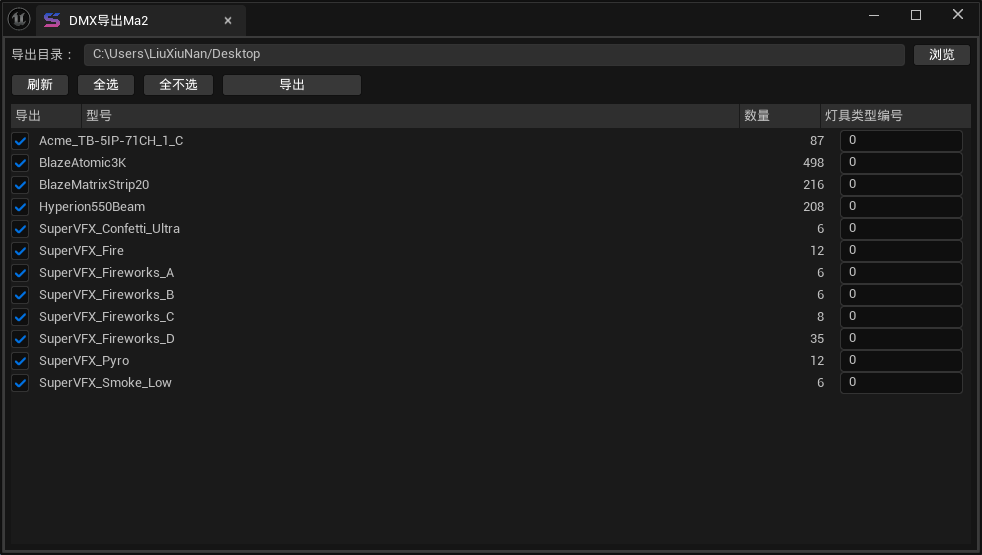
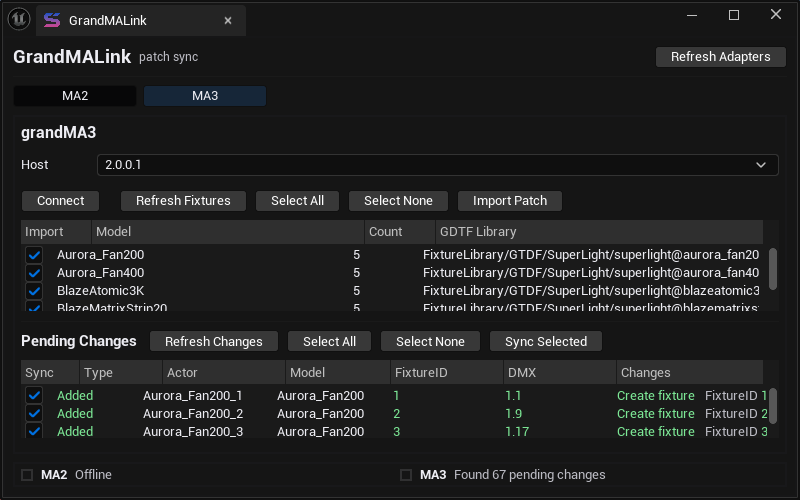
MVR written to the 1.6 spec with every GDTF packed in; grandMA changes previewed line by line before sending; the proposal packaged as an exe.
 SuperStage workflowHandoff
What you look at
What you hand over
Release 26H2.6
A fixture stopped being a blueprint and became data. That one move is what let the GDTF importer, the beam pipeline and the library rebuild land in the same release.
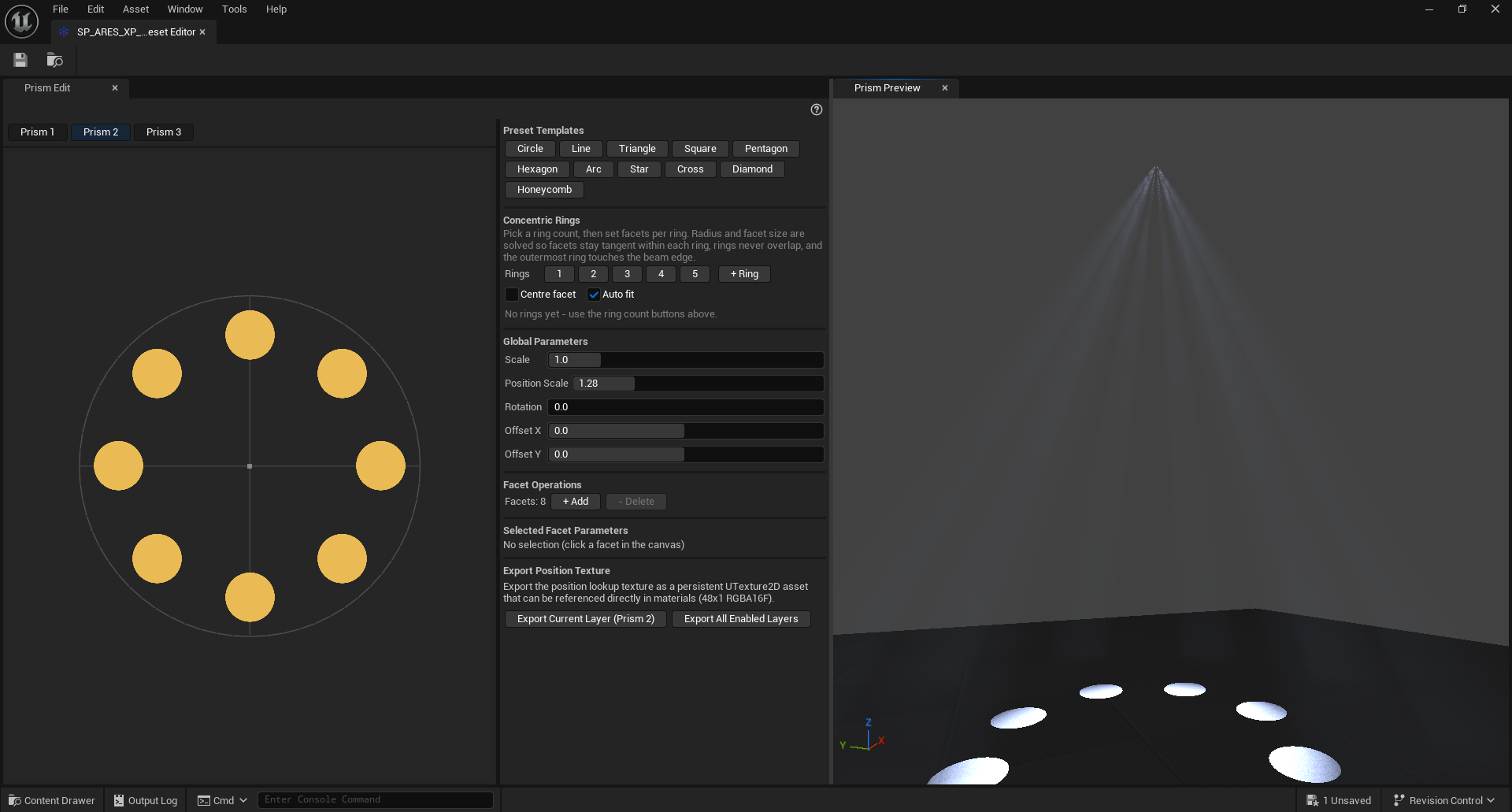
Three asset types replace the old one-blueprint-per-fixture arrangement: a definition holds identity, physical data, mechanical axes, emitters, optics and DMX modes; a channel library holds the DMX personality and can be shared by many fixtures; a prism preset holds three independent prism configurations. Every data-driven fixture is the same actor class, so the model is decided by the asset it points at, not by a C++ type.
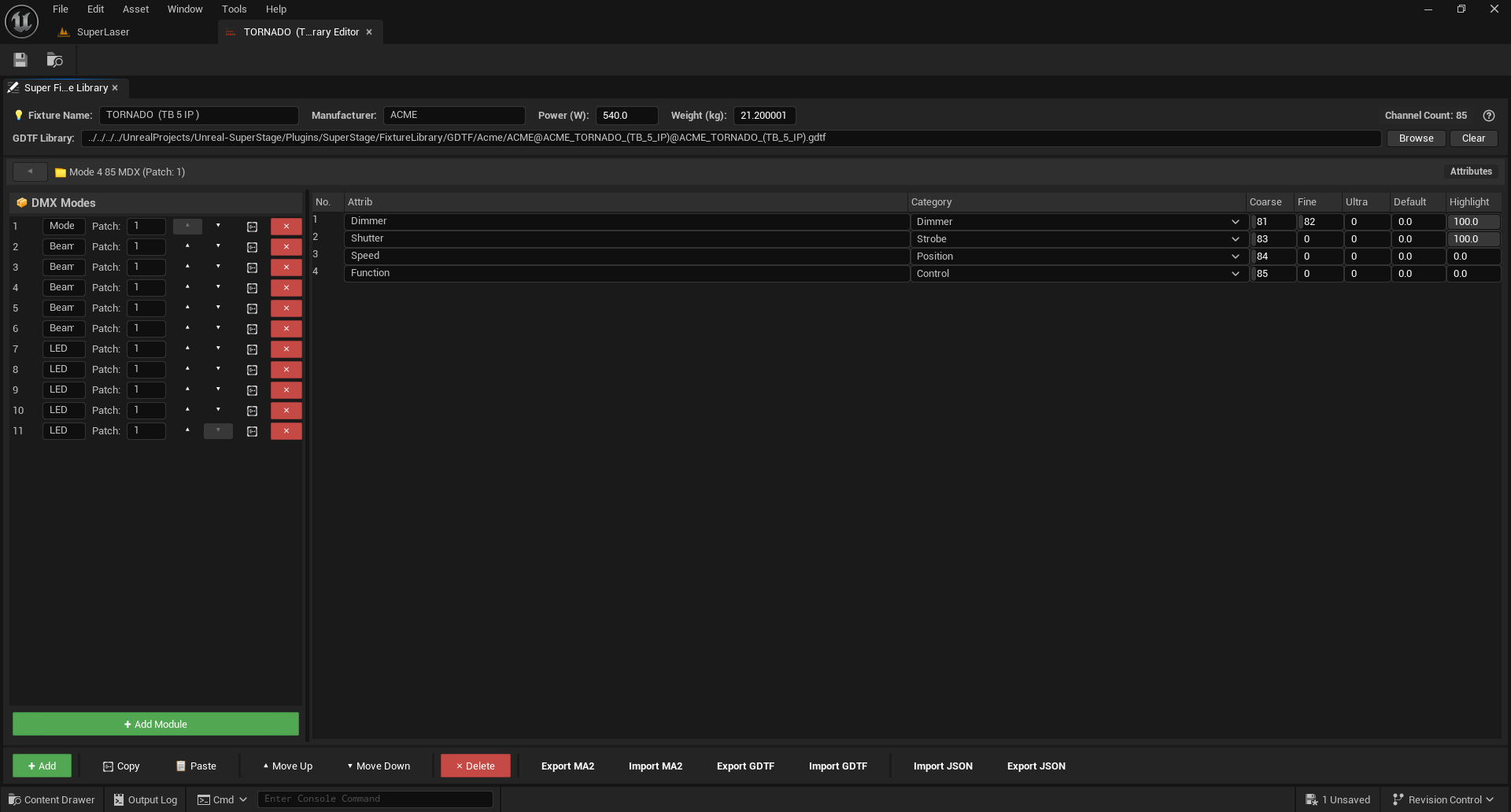
The GDTF importer reads channels and modes, the geometry tree and mechanical axes, the 3D model, gobo and colour wheels, prisms and thumbnails. Re-import is scoped: nine groups can be selected individually, so hand-tuned work is not overwritten. An existing definition can also be upgraded in place from its source package, which reports the differences before changing anything.
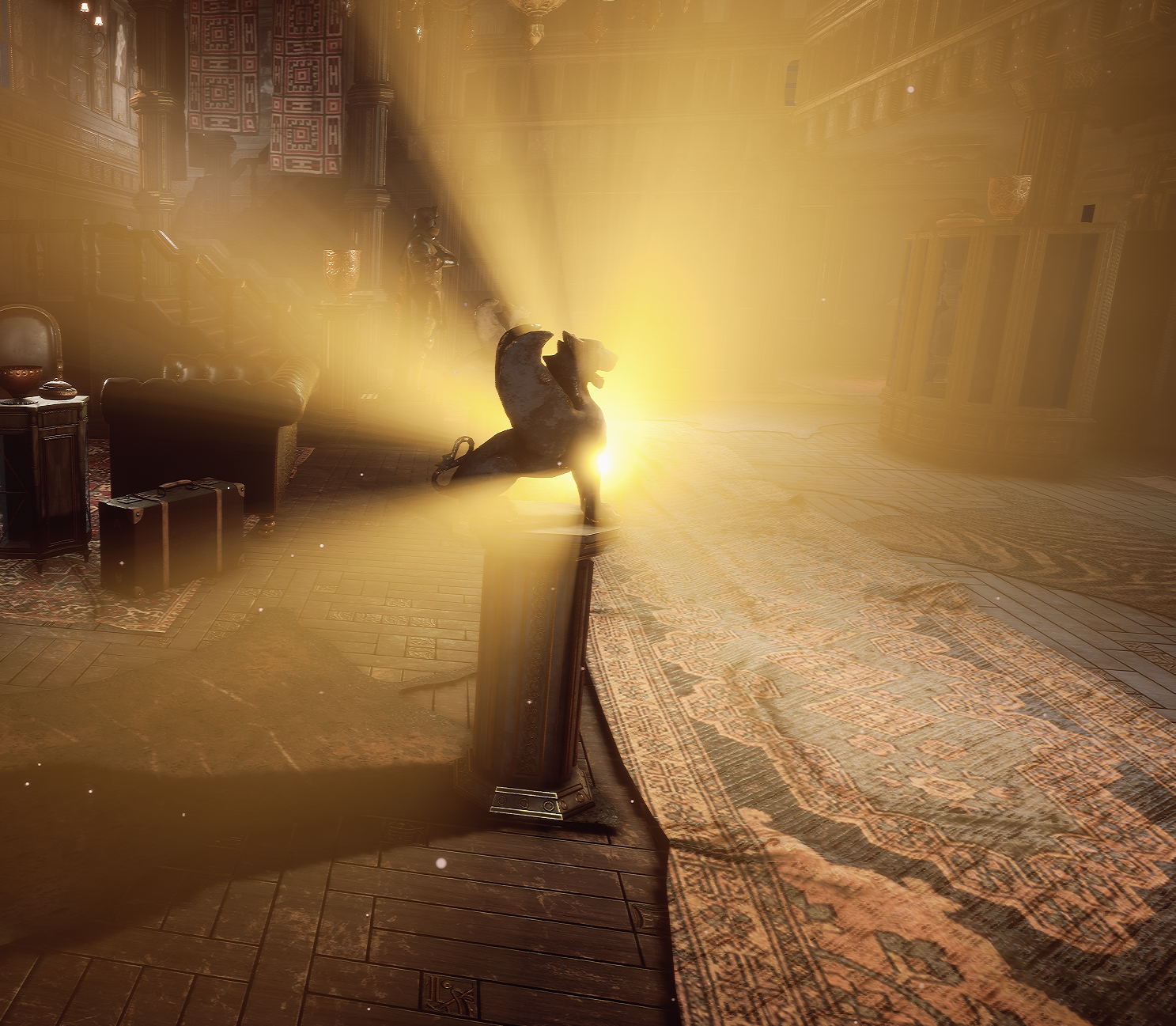
510 fixture definitions moved from material beams to volumetric beams, and imaging fixtures moved to volumetric shapers. The cone light and the column sample the same atlas, so occlusion is consistent between the beam and the pattern it casts. Distance-based culling is gone: a fixture the camera can see has a shadow.
Additive channels use measured emitter chromaticity and subtractive channels use measured filter chromaticity, so an 8000 K beam no longer matches a 3000 K tungsten source. Strobe is interpreted in Hz. Colour temperature endpoints come from the library rather than one fixed range. Pan and tilt travel is imported from the package, which had never been read before.
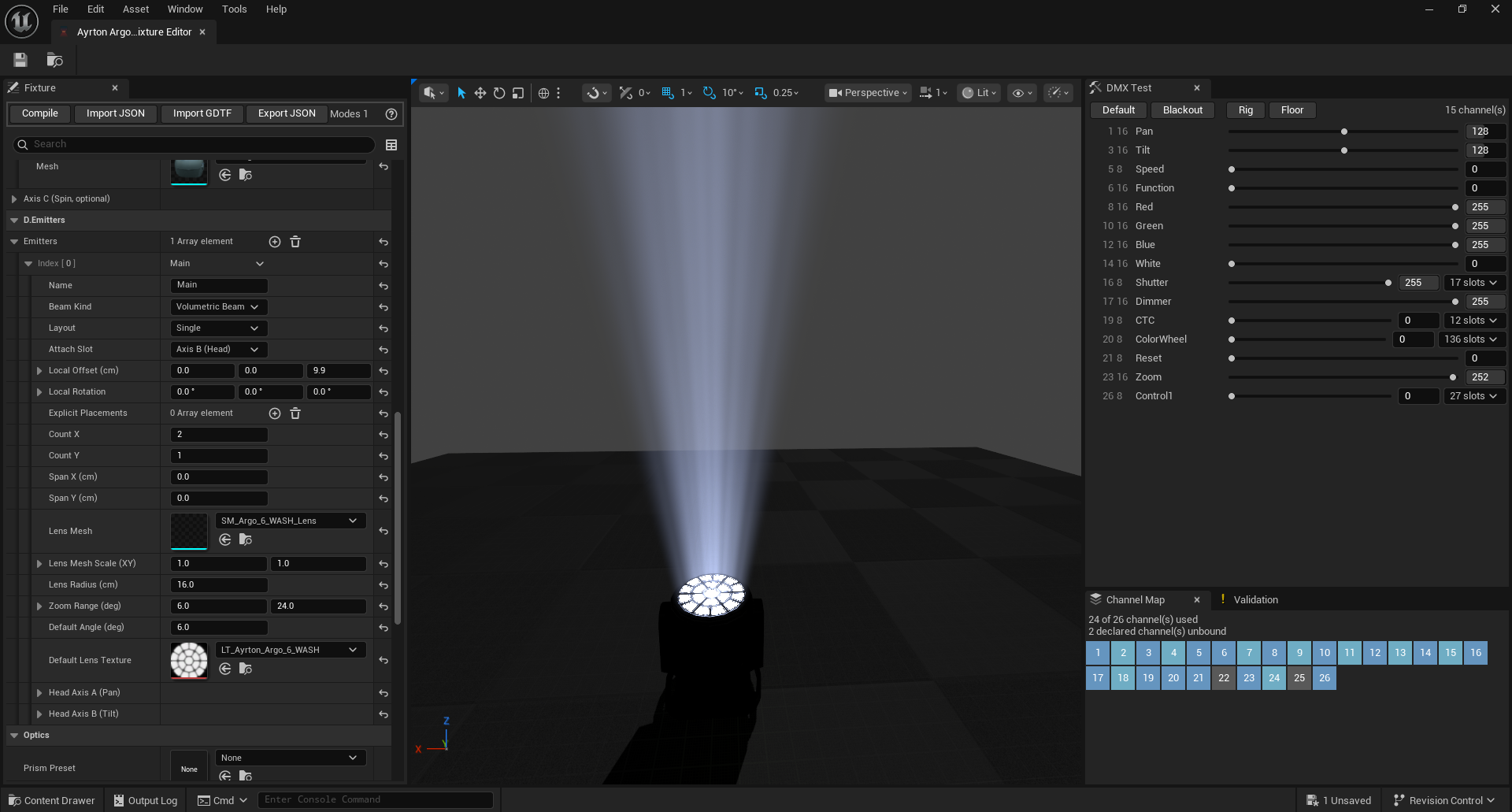
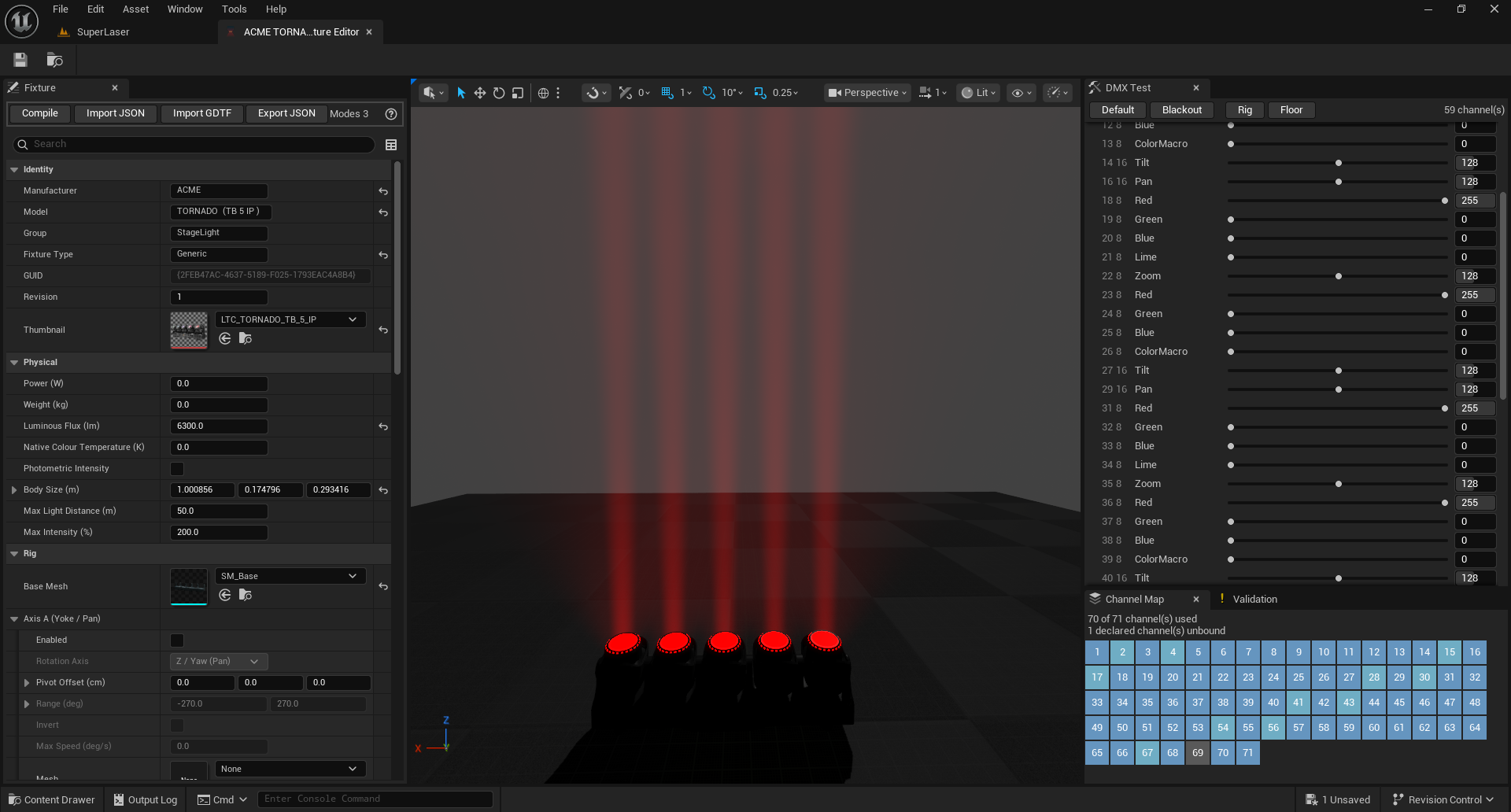
The fixture editor puts the definition, a per-channel DMX test, the address map and the validation result behind four tabs of a single viewport. The channel map states how many declared channels are actually bound, so a personality with dead channels is visible before the fixture reaches a plot.
Laser
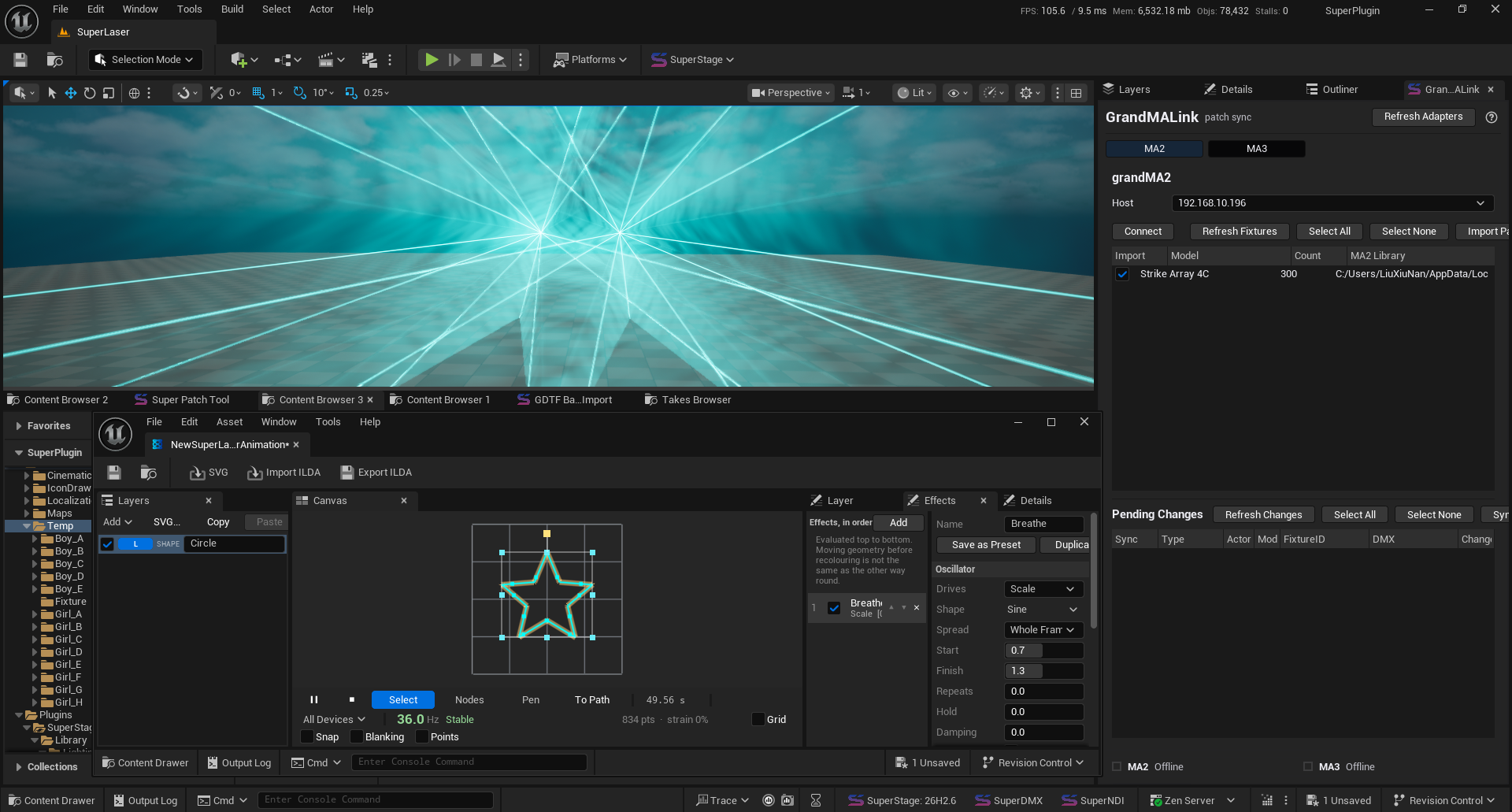
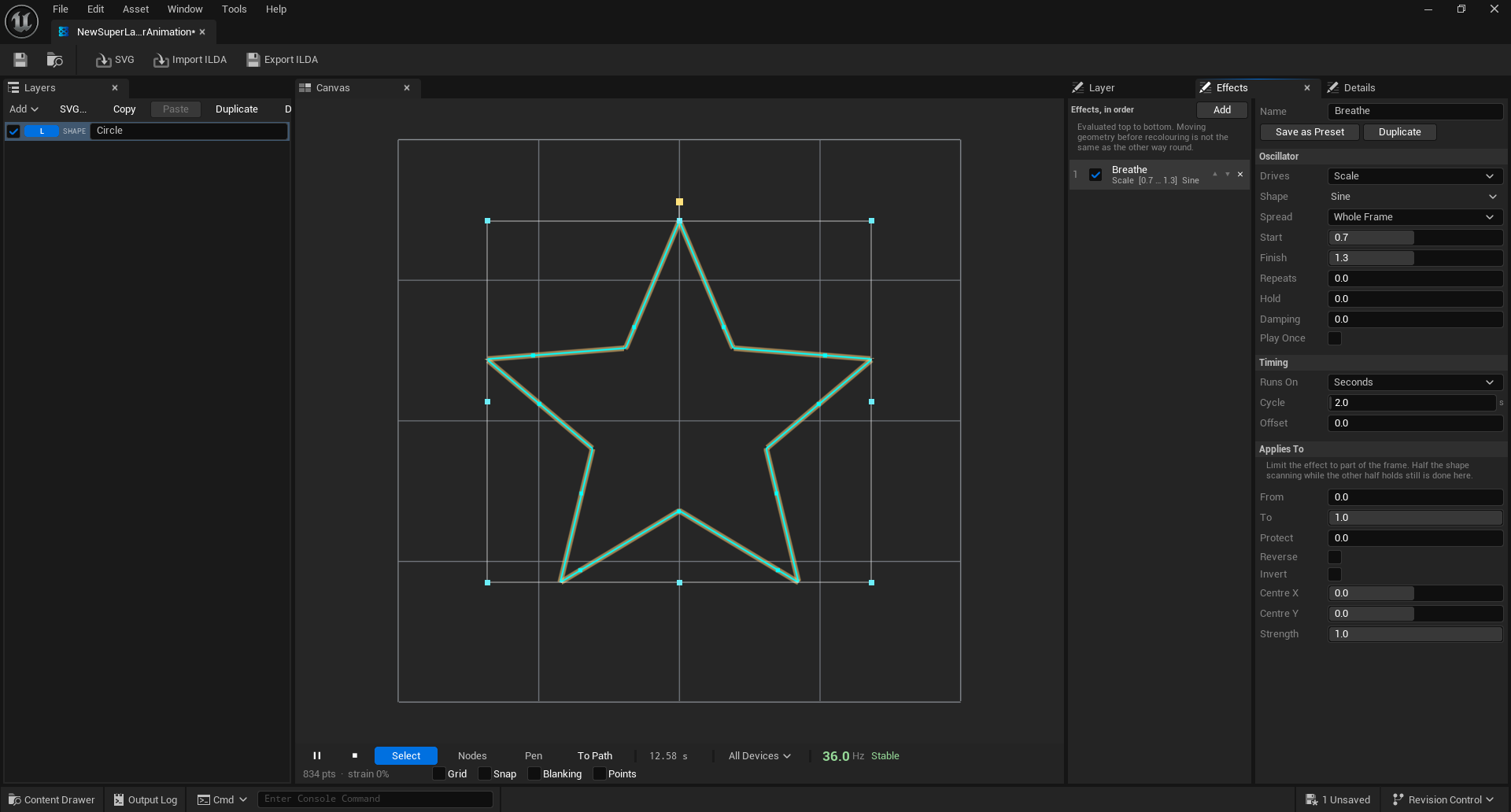
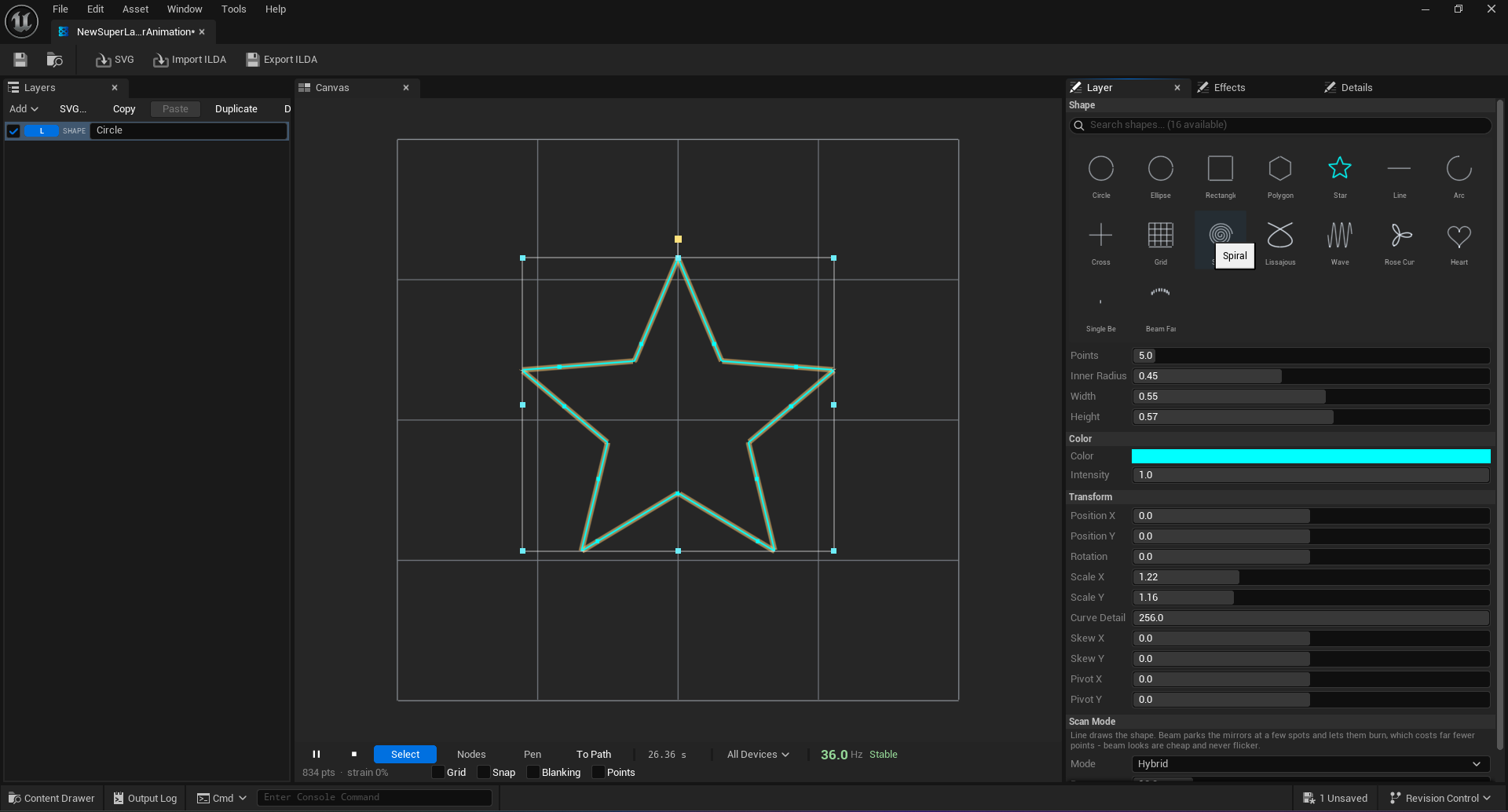
A laser animation stores bezier outlines and modulation parameters rather than a point cloud. The point stream is computed at playback, so the content is resolution-independent, editable after the fact, and unaffected by a change of scanner. It has no fixed duration either: motion comes from effect frequency, so any moment can be evaluated directly and scrubbing needs no warm-up.
Fixture authoring
Most rigs are built from conventional fixtures, and FixtureBuilder covers those without writing code. Past that boundary sit one-off bodies, bespoke mechanics and effect fixtures, which is where SuperTailor opens the C++ API.
Included with Ultra
A builder for conventional fixtures, and a converter for the GDTF library you already have. No C++ is involved.
Team licensing
C++ development access to SuperStage itself. Not a bigger builder, but the layer the builder is written against.
Boundaries
Previz prepares the show. It does not run it.
Real consoles, media servers, rigging systems, and network devices remain the authority on show execution.
Structural safety, regulatory approval, and on-site engineering review are done by professionals, not by previz.